Lisbon hosts international meeting on domestic work, archives, self-management and artistic practices
Researchers, writers, film and visual artists, domestic workers, and association and union leaders will gather in Lisbon on 6 and 7 February for a meeting dedicated to domestic and cleaning work, forms of self-management, and trade unionism, based on historical archives and real testimonies.
‘We are with you at home’ aims to bring together researchers, writers and artists in film and visual arts, domestic workers and association/union leaders on 6 and 7 February. Based on archives and field research, we will come together around the themes of domestic and cleaning work, migration and informality, self-management and trade unionism.
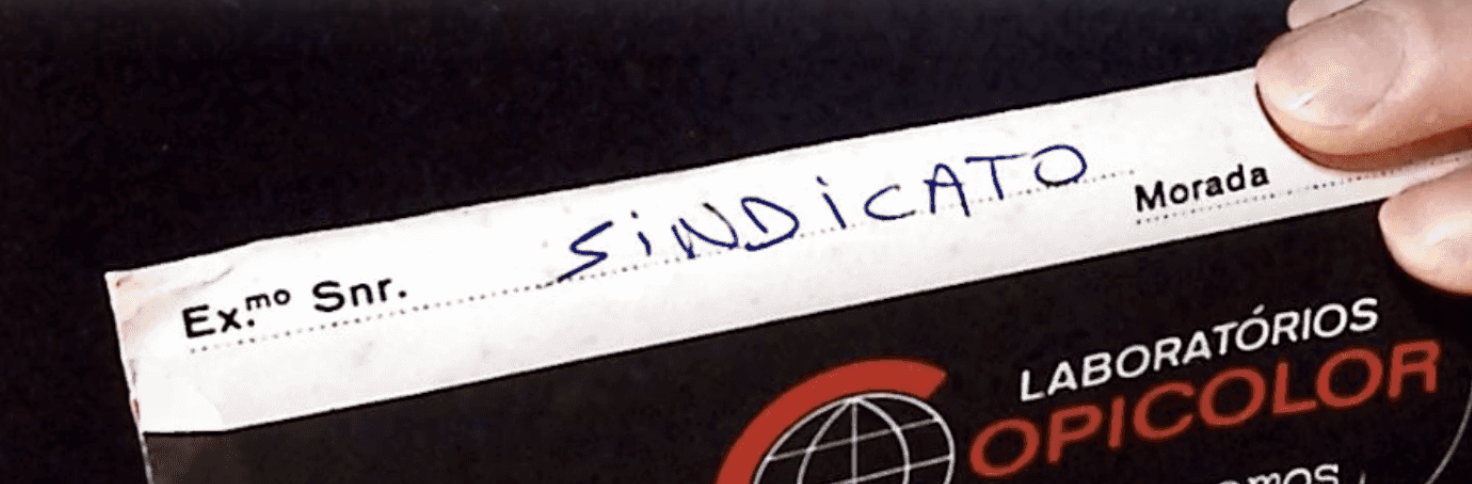
This meeting is the result of the project The Voice of Women Workers — The Archives of the Domestic Service Union (1974–1992), which was one of 20 projects selected to be part of the official celebrations of the 50th anniversary of 25 April by the Commemorative Commission.
On 6 February, at the Faculty of Social and Human Sciences of NOVA University Lisbon (FCSH), feminist researcher and theorist Leopoldina Fortunati will be present to present the recent edition of one of the classic works of Marxist-inspired Italian feminism, in a conversation with political economist Alessandra Mezzadri, professor at SOAS, University of London. The title of the conversation will be: Housewives, prostitutes, workers and capital: The arcane of reproduction, 45 years later.
Also during the morning, writer Manuel Abrantes will talk about the process of creating the novel Na terra dos outros (In the Land of Others), based on his research into domestic work, reflecting also on the public reception of the book and on presentations as moments of autobiographical and political sharing. Tânia Dinis and Inês Sapeta Dias will address the presence — or silence — of female domestic workers in history, political memory and cinema.
In the evening, the programme extends to Casa do Comum, with the screening of the film Le Balai Libéré, by Belgian director Coline Grando, who will be present. The film portrays a collective struggle led by cleaning workers at a Belgian university. The session will be moderated by Sofia Lemos Marques, mediator at Cinema Batalha and member of the MUTIM association.
On Saturday, 7 February, the meeting will take place at the Cape Verde Cultural Centre, on Rua de São Bento — the same street where the Domestic Service Union operated for decades, a central space in the memory of these workers' struggles in Portugal.
The second day includes a presentation by researcher Susana P. Miranda on the struggle of cleaning workers in Toronto, Canada, a collective process that would be honoured with a mural by artist Vhils, making visible in the urban space a history of labour organisation and resistance.
The programme also includes a forum theatre play, created and performed by migrant domestic workers.
Over the course of two days, the meeting promotes dialogue between artistic practices, academic research, collective memory and political action, calling on the archive as a living space for knowledge and social transformation.
It is supported by Transform!europe (funded by the European Parliament), FCT, CICS.Nova and IHC.
Full programme available here.
Registration form (free) available here.