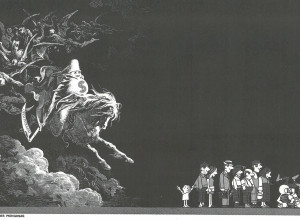
He was one of the most influential figures in 20th-century Portuguese graphic arts, whose work spanned architecture, painting, drawing, illustration and cartooning, all imbued with a profoundly ethical, critical and humanist vision.
Born in Lisbon in January 1928, he grew up in an artistic and intellectual environment that shaped his creative sensibility and his keen eye on society, establishing himself from an early age as a multifaceted and socially engaged artist. From a young age, he came into contact with different cultural realities through his travels across Europe, visiting countries such as Italy, France and the Netherlands. He studied architecture at the Faculty of Fine Arts of the University of Lisbon, later collaborating with the architect Alberto Pessoa on major urban and architectural projects, such as the housing complex on Avenida Infante Santo and the building of the Academic Association of Coimbra and the Gil Vicente Academic Theatre. Despite his success in this field, it was in the visual arts that he would find his true calling.
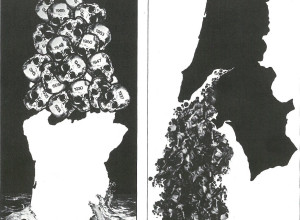
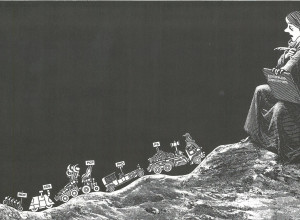
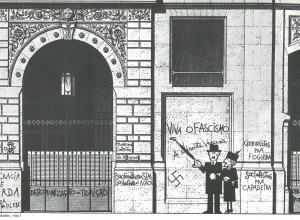
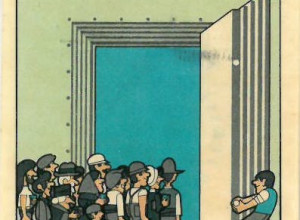
His artistic career spanned drawing, painting, set design, tapestry, ceramics and tile work, demonstrating exceptional versatility. However, it was in cartoons and political illustration that he achieved the greatest renown. Influenced by neo-realism, he used art as a tool to denounce social inequalities, political repression and the contradictions of the Estado Novo.
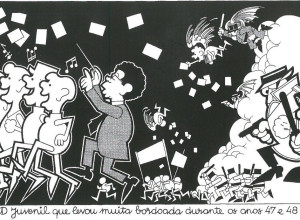
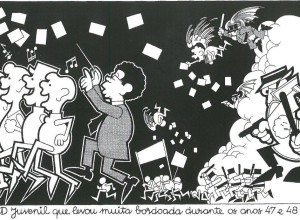
Abel Manta was arrested by the PIDE at Caxias Fort in February 1948 for his links to the MUD Youth Movement.
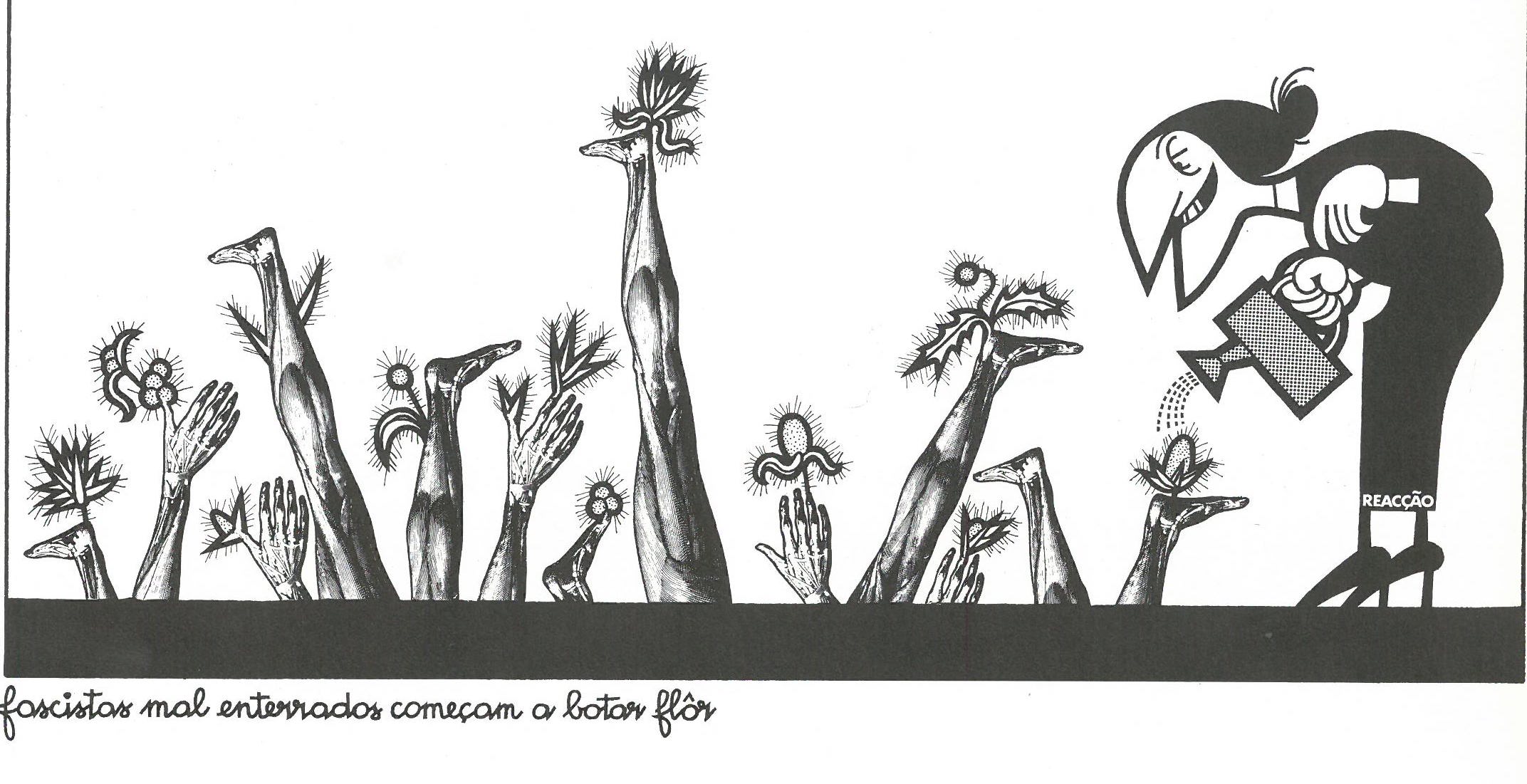
His caricatures and graphic works revealed a satirical, scathing and deeply critical perspective, often managing to circumvent censorship through irony and artistic subtlety.
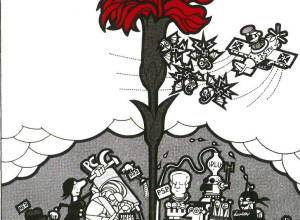
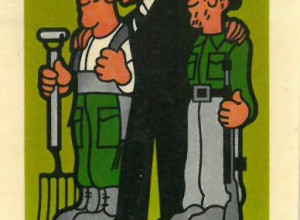
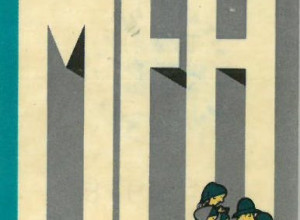
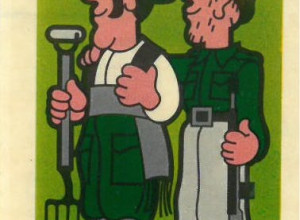
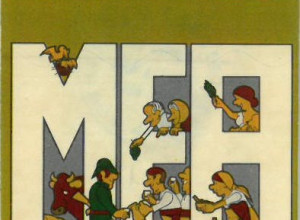
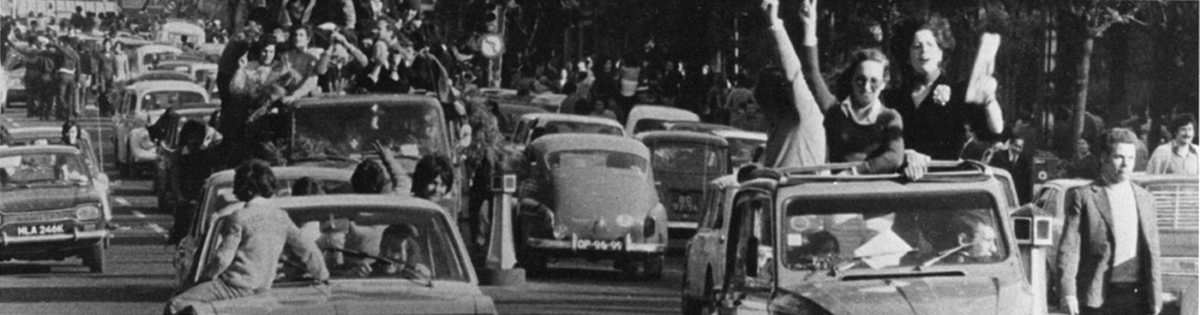
Throughout the 1960s and 1970s, he became a regular contributor to major Portuguese newspapers and publications, such as Almanaque, Diário de Lisboa, Diário de Notícias and O Jornal. His cartoons became true cultural symbols of the period before and after 25 April, reflecting the turbulent times of the regime’s fall, the revolution and the PREC. His connection to the ‘People-MFA’ alliance and his defence of democratic values were also expressed in countless posters and graphic works produced in that context.
Among his most notable works are the illustrations for books such as A Cartilha do Marialva and O Dinossauro Excelentíssimo by José Cardoso Pires, as well as set designs for plays inspired by authors such as Eça de Queirós, Franz Kafka and Luís de Sttau Monteiro. He also produced murals, tapestries, mosaics and ceramic panels for various public and cultural spaces.
From the 1980s onwards, he gradually moved away from political cartoons and devoted himself more intensely to painting.
Throughout his life, João Abel Manta received numerous awards and honours, and his work has been exhibited in leading national and international cultural institutions. His legacy stands as an essential testament to contemporary Portuguese history, to cultural resistance against authoritarianism, and to art’s capacity to challenge, provoke and transform consciousness. His cartoons and illustrations continue to remind us of the pains, excesses and contradictions of the past, keeping alive the values of freedom, democracy and collective memory.
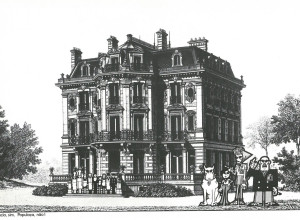
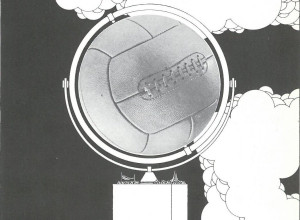
In honour of João Abel Manta, CD25A presents a selection of his drawings, as well as a video dedicated to one of his works, produced for schoolchildren as part of the ‘Fora da Caixa’ series.